Wednesday, November 7, 2012
MY PROFESSIONAL QUALITIES AS A TEACHER
-Observe trainees in the class or workshop for signs that they are failing to keep up, are bored or not understanding.
-Show flexibility in responding to trainees needs.
-Encourage trainees to take an active role in working through difficulties and take time to work through concepts in dealing with who have challenges.
-Communicate effectively with students as well as staff members.
-Creative and have an open attitude to change.
-Show empathy, fairness, caring and approachable by students.


MY ROLES AND DUTIES AS A TEACHER
MY ROLES AND DUTIES AS A TEACHER
As a teacher for vocational training center, I teach both theory and practical lessons. Each year, we (the VTC) admits students with different ethnic, tribal and educational backgrounds and I make sure that at least each student despite of his/her background understand and put in practice the knowledge and skills taught in the vocational training center in both theory and practice. These roles and duties include;
Prepare scheme of work and lesson plan for my periods
Teach students using different and possible teaching techniques such as lecture, demonstration, discussions and assessment.
Monitor and evaluate students’ performance
Create good learning environment for the students
Prepare and mark both assessment tests and examinations
Keep up to date records of the activities of the department.
Submit end of month reports to my senior/supervisor on the activities of the department.
Face any sort of situation that arise in my classroom and resolve it with confidence and forward those that require the attention of my supervisor.
Tuesday, November 6, 2012
“CRACKING OF BUILDINGS AS A CHALLENGE”
Most societies in South Sudan are facing challenge in the field of bricklaying and concrete practice (BCP). Cracks have become an indigenous, undesirable feature in both the old and newly constructed buildings. Building’s walls, foundations and floors are developing cracks in many parts of the country more especially in Malakal town.
After completion of a building, unexpectedly cracks begin to develop on the walls, foundations and floors which weaken the strength and eventually the stability of the building as well as its durability. Although the craftsmen in their own capacities take actions to minimize the extent and severity of the cracking during the building process, it is rarely possible to avoid them entirely.
According to my own observation, these cracks are gradually increasing in height and width which may be the first sign of serious defect affecting the serviceability of the house. This therefore calls for special attention from the craftsmen, government and individuals. It is most probably that, cracks that are not properly identified and paid attention to may lead to collapse of the structure.
Assume that, a family building collapses, they are more likely to be exposed to more dangers like; coldness at night, rains, mosquito bites and spending more money to construct a new one or may be for renovation. The purpose of this technical note is to seek for help and advice on the increasing level of challenges caused by cracking of buildings in South Sudan, Malakal. The research is carried out to establish a common ground and possible ways on how I can improve my practice as well as my learning. And also act as an eye opener to other craftsmen in the field of bricklaying and concrete practice and may in other crafts to also identify and understand common challenges in their professional practices. During this study, I passed through two significant shifts; from “I can’t” to “I can” and from I can to “I care”.
Not until possibilities are found to reduce or avoid this phenomenon, clients and craftsmen will keep on facing economic lose. This therefore makes most of the clients have less trust in the craftsmen. If this cracking of foundations, walls and floors are not minimized or reduced the guarantee of such buildings may also be uncertain.
What could have caused these cracks? How can these cracks be reduced or avoided? Contributions of ideas and skills on; understanding, minimizing/reducing and avoiding cracks are welcome from craftsmen and well-wishers.
Tuesday, September 25, 2012
CRACKING OF BUILDINGS AS A CHALLENGE

EFFECTS OF CRACKS ON A BUILDING

EFFECTS OF CRACKING BUILDINGS ON THE LOCAL COMMUNITY
Cracking of buildings is one of the needs in the field of bricklaying and concrete practice as my professional practice that require special attention from both the government, individuals and craftsmen. Although the craftsmen take actions to minimize the extent and severity of the cracking during the building process, it is rarely possible to avoid them entirely. It is most probably that, cracks that are not properly identified and paid attention to may lead to collapse of the structure. if a family building collapses,they may become homes. This therefore exposes them to more dangers like; coldness at nightone, mosquito bits, spending more money to construct a new building and mistrust between the clients and the craftsmen.
Monday, September 10, 2012
CRACKING OF BUILDINGS AS A CHALLENGE TO THE SOCIETY
As the youngest country in the world to get its independence from the Sudan in 2010, South Sudan is currently facing a big challenge in the sector of bricklaying and concrete practice. There are many needs in the field of bricklaying and concrete practice as my professional practice that require special attention from both the government, individuals and craftsmen. Building’s walls and foundations are developing cracks in many parts of the country more especially in Malakal town (Upper Nile state).
 Cracks have become an indigenous, undesirable feature in both the old and newly constructed buildings. After completion of a building, unexpectedly cracks begin to develop on the walls, foundations and floors which weaken the strength and eventually the stability of the building as well as the durability of the whole building. These cracks are becoming a big challenge in my professional technical vocational practice as a builder. It is most probably that, cracks that are not properly identified and paid attention to may lead to collapse of the structure.
Not until possibilities are found to reduce or avoid this phenomenon, clients and craftsmen will keep on facing big economic lose. This may therefore cause mistrust between the clients and the craftsmen. Although the craftsmen take actions to minimize the extent and severity of the cracking during the building process, it is rarely possible to avoid them entirely. What could be the cause of these cracks? How can these cracks be reduced or avoided? Contributions of ideas and skills on; understanding, minimizing/reducing and avoiding cracks destroying buildings are welcome from well-wishers and craftsmen.
Cracks have become an indigenous, undesirable feature in both the old and newly constructed buildings. After completion of a building, unexpectedly cracks begin to develop on the walls, foundations and floors which weaken the strength and eventually the stability of the building as well as the durability of the whole building. These cracks are becoming a big challenge in my professional technical vocational practice as a builder. It is most probably that, cracks that are not properly identified and paid attention to may lead to collapse of the structure.
Not until possibilities are found to reduce or avoid this phenomenon, clients and craftsmen will keep on facing big economic lose. This may therefore cause mistrust between the clients and the craftsmen. Although the craftsmen take actions to minimize the extent and severity of the cracking during the building process, it is rarely possible to avoid them entirely. What could be the cause of these cracks? How can these cracks be reduced or avoided? Contributions of ideas and skills on; understanding, minimizing/reducing and avoiding cracks destroying buildings are welcome from well-wishers and craftsmen.
Thursday, June 14, 2012
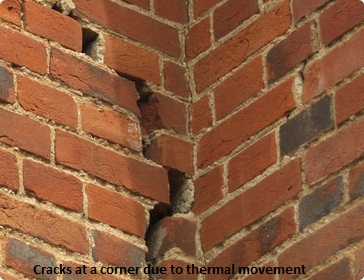
Challenges caused by cracking of walls
This article presents a summary of my understanding on cracking of buildings as a challenge in my professional practice as a builder. The appearance of cracks is a symptom of distress within the building. However a crack maybe the first sign of a serious defect which may affect the serviceability or the stability of the building. The appearance of cracks can also affect the value of the building, its insurability, the sale ability. In some instances the remedial work may exacerbate the problem resulting in yet further and more extensive cracking. I carried out this study in fulfillment of the theme for the third semester in my Bachelor’s program which is to explore the relation between my professional technical vocational practices as a builder and my understanding about the challenges in the society which need to be addressed such as ‘cracking of walls. The research is also carried out to establish a common ground and possible ways on how its information can influence other craftsmen in the field of bricklaying and concrete practice and may in other crafts to also identify and understand common challenges in the professional practices. The main research method I used in this study into understanding cracks as a challenge in my practices as a builder is “observation”. In this study, I see what is happening in its natural form; make my observations and reflections. Meanwhile, the research tools I used included camera, notebook and pens and daily data log.
Friday, June 1, 2012
Summary of project report three
“Documentation of the needs in the society in relation to my professional technical vocational practice as a builder”
This article presents a summary of my project report for semester three in my Bachelor’s Degree program for technical vocational education for teachers at Upper Nile University, Malakal. The report discusses how I carried out an enquiry into exploring my understanding on setting out corners of a building as accurately as possible as one of the identified challenges in the professional practice.
Needs in the society in relation to my professional technical vocational practices as a builder refers to the challenges experienced in the professional practices. For example the challenges of; walls developing cracks, moisture rising up into the wall, roofs of building being blown off by heavy winds, inaccurate setting of corners and so on. Some if not all of this challenges may proof too costly to rectify at a later stage. Therefore, as a practitioner, it may be important on a professional point of view to identify and understand such challenges in the professional practices and evaluate and analyze how it can be reduced or possibly avoided in the professional practices.
The study was carried out in fulfillment of the theme for the third semester in this Bachelor’s program which is to explore the relation between my professional technical vocational practices as a builder and my understanding about the needs in the society. The research is also carried out to establish a common ground and possible ways on how its information can influence other craftsmen in the field of bricklaying and concrete practice and may in other crafts to also identify and understand common challenges in the professional practices.
The main research method I used in this study into understanding setting of corners of a building as a challenge in my practices as a builder is “observation”. In this study, I see what is happening in its natural form; make my observations and reflections. The research tools I used included camera, notebook and pens and daily data log.
Tuesday, April 3, 2012
How I can cut a brick into required length
Introduction
Cutting a brick or bricks to the required size and length is one of the professional technical skills I have as a builder. This article describes how to cut a brick into three quarter bat. A three quarter brick is the brick where a quarter of the brick is cut off.
In brick cutting, no matter what pattern is followed when cutting the bricks. It can be done with a circular saw or grinders fitted with a masonry blade. But for my case, I prefer to cut the brick by hand tools such as cold chisel, a broad-bladed chisel and a brick hammer. I have chosen this method because it is the common and affordable way in most sites and it is a less dusty alternative. The cold chisel should least be 3/4 inch wide; the broad-bladed chisel some time known as a brick set should be at least 3 inches wide.
Tools needed for the exercise
Cold chisel, broad-bladed chisel, brick hammer, a ruler of 30cm or more, tape measure (2.5meters or more), handle gloves, eye glasses and earplugs
Safety precautions
Just before starting the work, I put on safety glasses to protect and safeguard my eye, hand gloves to protect hands and earplugs for the safety of the ears in case of any unexpected noise during the process of cutting.
Steps to be followed
First, measure the brick with a tape measure or may be a 30cm rule to determine the targeted position for cutting
Mark cutline on each side of the brick using a pencil and a set square some time the builder square can also be used.
Place the brick on the ground or a sand bed, Score the cutline by tapping a cold chisel gently at about a 60-degree angle; striking straight on or with a full swing could prematurely split the brick and leave an uneven break. Alternate the angle of the chisel from side to side until you’ve made a 1/16-inch-deep groove all the way around the brick.
Hold the brick set upright in the score line. Face the set’s beveled edge toward the scrap side of the cut, and then tilt the blade slightly away from that side. Give it a solid blow with your hammer; the brick should split along the score.
Chip (cut) away any excess material with the chisel end of a brick hammer. Some time, removal of the excess material can be done by the use of a brick trowel.
Cutting a brick or bricks to the required size and length is one of the professional technical skills I have as a builder. This article describes how to cut a brick into three quarter bat. A three quarter brick is the brick where a quarter of the brick is cut off.
In brick cutting, no matter what pattern is followed when cutting the bricks. It can be done with a circular saw or grinders fitted with a masonry blade. But for my case, I prefer to cut the brick by hand tools such as cold chisel, a broad-bladed chisel and a brick hammer. I have chosen this method because it is the common and affordable way in most sites and it is a less dusty alternative. The cold chisel should least be 3/4 inch wide; the broad-bladed chisel some time known as a brick set should be at least 3 inches wide.
Tools needed for the exercise
Cold chisel, broad-bladed chisel, brick hammer, a ruler of 30cm or more, tape measure (2.5meters or more), handle gloves, eye glasses and earplugs
Safety precautions
Just before starting the work, I put on safety glasses to protect and safeguard my eye, hand gloves to protect hands and earplugs for the safety of the ears in case of any unexpected noise during the process of cutting.

Steps to be followed
First, measure the brick with a tape measure or may be a 30cm rule to determine the targeted position for cutting
Mark cutline on each side of the brick using a pencil and a set square some time the builder square can also be used.
Place the brick on the ground or a sand bed, Score the cutline by tapping a cold chisel gently at about a 60-degree angle; striking straight on or with a full swing could prematurely split the brick and leave an uneven break. Alternate the angle of the chisel from side to side until you’ve made a 1/16-inch-deep groove all the way around the brick.

Hold the brick set upright in the score line. Face the set’s beveled edge toward the scrap side of the cut, and then tilt the blade slightly away from that side. Give it a solid blow with your hammer; the brick should split along the score.
Chip (cut) away any excess material with the chisel end of a brick hammer. Some time, removal of the excess material can be done by the use of a brick trowel.
Tuesday, November 15, 2011
MY READING METHODS"
Introduction
There are a wide range of different techniques that I can use to study for a particular exam, interview or for other similar purpose. In order for me to choose the study system or series of study techniques that will be most effective for that particular situation, it is essential for me to consider variety of factors.
First, I should identify the overall goal that I am attempting to achieve Secondly, I should understand the material rather than just memorizing it. And thirdly, I should keep my study fluid.
Why do I have to choose a reading style or variety of reading styles?
This means that, I have to shift between different reading styles to enable me study the material(s) as efficiently as possible. In this case, I have to adopt reading style(s) that suits the material I read. These reading styles include; Scanning reading style, skimming reading style and comprehension reading style. Details on the article
Wednesday, September 7, 2011
Plans for semster two
Planning for semester two September 2011
1.Working on improving project report examination number (project report examination for semester one.
2.Publishing articles into the Blog, Wikispaces,flickr and wikimapia
3.Managing image processing
4.Planning, monitoring and evaluation
5.Documentation of individual values
6.Project report examination number two
Documentation of individual values.
Purpose
Students of TVET are invited to develop awareness of and to document their own values and ways of understanding and thinking based upon the documentation of their own professional technical vocational practice in their different fields of profession for example carpentry and joinery, General electricity and brick laying and concrete practice. All this documentation shall be done by electronic media.
Each student will be expected to create the documentation: “My professional technical vocational practice” within his or her craft in a value based perspective of knowledge and learning. The students are through this process of documentation, building awareness of their own values, knowledge and ways of thinking. They are to uncover and present their own tacit knowledge and establish a foundation for improvement of their own professional technical vocational practice.
Objectives
The main objective of this documentation of individual values is to build their own knowledge, reasoning capacity and ways of thinking. Also to some extend to share their tacit knowledge.
Diagram describing how I can document my values as a builder/ instructor
Time frame
Time frame for this program is minimum two weeks and maximum three weeks.
1.Working on improving project report examination number (project report examination for semester one.
2.Publishing articles into the Blog, Wikispaces,flickr and wikimapia
3.Managing image processing
4.Planning, monitoring and evaluation
5.Documentation of individual values
6.Project report examination number two
Documentation of individual values.
Purpose
Students of TVET are invited to develop awareness of and to document their own values and ways of understanding and thinking based upon the documentation of their own professional technical vocational practice in their different fields of profession for example carpentry and joinery, General electricity and brick laying and concrete practice. All this documentation shall be done by electronic media.
Each student will be expected to create the documentation: “My professional technical vocational practice” within his or her craft in a value based perspective of knowledge and learning. The students are through this process of documentation, building awareness of their own values, knowledge and ways of thinking. They are to uncover and present their own tacit knowledge and establish a foundation for improvement of their own professional technical vocational practice.
Objectives
The main objective of this documentation of individual values is to build their own knowledge, reasoning capacity and ways of thinking. Also to some extend to share their tacit knowledge.
Diagram describing how I can document my values as a builder/ instructor
Time frame
Time frame for this program is minimum two weeks and maximum three weeks.
summary of project report exam one June 2011
Summary of my project report examinations for semester one
June 2011
chapter one
In chapter one, I described my own profession as a builder in the present South Sudan, the types of buildings in use in South Sudan; being traditional huts and modern buildings. I also described how building skills can be acquired in South Sudan. I included the theme, purpose, objectives and the problem statement of the study plus the the research questions as well.
Chapter two
In this chapter, I wrote on the types of buildings in South Sudan, their main functions and the skills needed for their construction. I discussed about different building skills that I have acquired and able to apply/put them into practice. I also described about investigating a construction site before constructing a building in it, productions of burned clay bricks and the qualities of good burned clay bricks.
Chapter three
In this chapter, I discussed details into my professional competence as a builder in South Sudan. I also wrote about how to set a concrete brick wall on a slab, the main reasons for constructing a concrete brick walls and the materials and tools that are necessary for the construction work, the types of wall and qualities of good wall. I further described on how to cast a concrete slab, the materials and tools that are essential for casting slab and making of form work for concrete. I discussed on making of form work, measurement of materials for concrete, the methods of mixing it and the reasons for involving each step. I also discussed on how to cast (lay) the ready mixed concrete materials to its final and desired place. Lastly, how to take care (cure) for laid concrete and the effects of moisture on a curring concrete.
Chapter four
I discussed and analyzed on the design of concrete mixture, the standard ratio(s) of materials for concrete for example cement, sand, aggregate and water. I also pointed on important factors affecting effectiveness of particular concrete materials like; cement,sand, aggregate and water. I described briefly on how and why to reinforce a concrete slab for a building.
I also included key information on how to produce good quality clay bricks that can be used for constructing good quality concrete walls. My report also contain technical hand drawn diagrams that are scanned and attached. For example in figure one a sketch of a corner profile for setting corners of a building, figure two a local tool for compacting concrete and figure three for a standard burned clay bricks.
June 2011
chapter one
In chapter one, I described my own profession as a builder in the present South Sudan, the types of buildings in use in South Sudan; being traditional huts and modern buildings. I also described how building skills can be acquired in South Sudan. I included the theme, purpose, objectives and the problem statement of the study plus the the research questions as well.
Chapter two
In this chapter, I wrote on the types of buildings in South Sudan, their main functions and the skills needed for their construction. I discussed about different building skills that I have acquired and able to apply/put them into practice. I also described about investigating a construction site before constructing a building in it, productions of burned clay bricks and the qualities of good burned clay bricks.
Chapter three
In this chapter, I discussed details into my professional competence as a builder in South Sudan. I also wrote about how to set a concrete brick wall on a slab, the main reasons for constructing a concrete brick walls and the materials and tools that are necessary for the construction work, the types of wall and qualities of good wall. I further described on how to cast a concrete slab, the materials and tools that are essential for casting slab and making of form work for concrete. I discussed on making of form work, measurement of materials for concrete, the methods of mixing it and the reasons for involving each step. I also discussed on how to cast (lay) the ready mixed concrete materials to its final and desired place. Lastly, how to take care (cure) for laid concrete and the effects of moisture on a curring concrete.
Chapter four
I discussed and analyzed on the design of concrete mixture, the standard ratio(s) of materials for concrete for example cement, sand, aggregate and water. I also pointed on important factors affecting effectiveness of particular concrete materials like; cement,sand, aggregate and water. I described briefly on how and why to reinforce a concrete slab for a building.
I also included key information on how to produce good quality clay bricks that can be used for constructing good quality concrete walls. My report also contain technical hand drawn diagrams that are scanned and attached. For example in figure one a sketch of a corner profile for setting corners of a building, figure two a local tool for compacting concrete and figure three for a standard burned clay bricks.
Friday, July 1, 2011
Increasing symbolic value of TVET certificate.
UPPER NILE UNIVERSITY, MALAKAL
How I can increase the symbolic value of the technical vocational education for teachers (TVET) certificate
Increasing the symbolic value of TVET certificate to my own understanding means to make people know and understand the value of technical and vocational education for teachers (TVET) program in South Sudan. Secondly to make people aware and have trust in the document that I would be awarded. The following tools can be applied to pass information to the society and more especially those who are concerned.
Internet connection
Is a global system of interconnected computer network that connect people together through email, Blog, Facebook, twitter, You tube, and Flickr accounts. As a student, I should write articles for example articles on the overall aim on formation of the college, the crafts in the faculty and the exactly area it operates in.
Use of Blog
Is a part of website usually maintained by individual with regular entries of commentary, descriptions of events or other materials such as graphics, video and articles. Publishing of articles about the technical vocational education for teachers (TVET) in Upper Nile University to the public via Blog so that the readers can know that there is a college of this kind existing and operating in South Sudan.
Use of you tube
You tube is a video sharing website on which users can upload, share and view videos. Videos about the college can be published. Also Publishing presentation of project report examinations to you tube so that the readers more especially those concerned with technical education or any related technical aspects to know that TVET program is operating in Upper Nile University in Malakal.
Implementation of plans and programs connected to the learning and training program to make the society and the people concerned to be aware of of TVET program in Malakal.
Also ability to put into practice the skills and knowledge acquired while in the training in the right field or department as expected.
How I can increase the symbolic value of the technical vocational education for teachers (TVET) certificate
Increasing the symbolic value of TVET certificate to my own understanding means to make people know and understand the value of technical and vocational education for teachers (TVET) program in South Sudan. Secondly to make people aware and have trust in the document that I would be awarded. The following tools can be applied to pass information to the society and more especially those who are concerned.
Internet connection
Is a global system of interconnected computer network that connect people together through email, Blog, Facebook, twitter, You tube, and Flickr accounts. As a student, I should write articles for example articles on the overall aim on formation of the college, the crafts in the faculty and the exactly area it operates in.
Use of Blog
Is a part of website usually maintained by individual with regular entries of commentary, descriptions of events or other materials such as graphics, video and articles. Publishing of articles about the technical vocational education for teachers (TVET) in Upper Nile University to the public via Blog so that the readers can know that there is a college of this kind existing and operating in South Sudan.
Use of you tube
You tube is a video sharing website on which users can upload, share and view videos. Videos about the college can be published. Also Publishing presentation of project report examinations to you tube so that the readers more especially those concerned with technical education or any related technical aspects to know that TVET program is operating in Upper Nile University in Malakal.
Implementation of plans and programs connected to the learning and training program to make the society and the people concerned to be aware of of TVET program in Malakal.
Also ability to put into practice the skills and knowledge acquired while in the training in the right field or department as expected.
College of technical vocational education for teachers
Upper Nile University, Malakal
College of technical vocational education for teachers (TVET)
Upper Nile University in Malakal, in collaboration with Akershus university college Norway, offer a four years Bachelor's Degree program in technical vocational education for teachers (TVET). The program is a newly opened faculty in Upper Nile University in Malakal, Upper Nile state South Sudan. It was opened on 28th February 2011 and is currently operating in the premises of Malakal vocational training center located near the ministry of Labor and public service main office.
The program has three technical departments of; building and construction, General electricity and carpentry and joinery. The faculty has a total of ten students. These are instructors in technical and vocational training centers in South Sudan. These students are brought for capacity building in order to raise the standard of technical and vocational institutions in South Sudan.
The program tends to meet the need for future leaders, teachers and managers in the industry, business sector, the technical and vocation training institutions as well as the public planning of the capacity building.
The overall aim for this Bachelor's Degree program in TVET is to fulfill the increasing demands in the societies for high qualified and specialized technical vocational products and services.
By Denaya Denis John.
Faculty of TVET, Upper Nile University.
College of technical vocational education for teachers (TVET)
Upper Nile University in Malakal, in collaboration with Akershus university college Norway, offer a four years Bachelor's Degree program in technical vocational education for teachers (TVET). The program is a newly opened faculty in Upper Nile University in Malakal, Upper Nile state South Sudan. It was opened on 28th February 2011 and is currently operating in the premises of Malakal vocational training center located near the ministry of Labor and public service main office.
The program has three technical departments of; building and construction, General electricity and carpentry and joinery. The faculty has a total of ten students. These are instructors in technical and vocational training centers in South Sudan. These students are brought for capacity building in order to raise the standard of technical and vocational institutions in South Sudan.
The program tends to meet the need for future leaders, teachers and managers in the industry, business sector, the technical and vocation training institutions as well as the public planning of the capacity building.
The overall aim for this Bachelor's Degree program in TVET is to fulfill the increasing demands in the societies for high qualified and specialized technical vocational products and services.
By Denaya Denis John.
Faculty of TVET, Upper Nile University.
Subscribe to:
Posts (Atom)